Planning
I started planning for the eclipse nearly a year before the actual event. Thinking about places to go on the internet, and I had a few ground rules. Number one I didn’t want to be in a city to photograph a famous landmark. That is not my style, I don’t enjoy photographing man made things in general as you’ve probably seen in my images I tend not to include these landmarks.
Secondly, I’d like to be without the crowds, who have the potential to really mess up your experience and your images. That last one is a very important aspect, the experience. I’ll come back to this later.
Location – Have a back-up
First was finding a hotel, we settled on Santander, allready being part of of the path of totality, this gave us a a firm base where we either could drive along the coast to Gijon or inland to Burgos, depending on the cloud base off the day. This gave us two options, and while researching the chance of having clear skies on one of the two options was pretty good, but never a guarantee.
My plan was to get a timelapse of an eclipsing sun from a nice remote area. I used www.peakfinder.com a lot for scouting locations and checking alignment. There were a few potential places we could go, but a lot of places in the high planes of Spain near Burgos seemed promising. Also I had contact with Tomas and Constantine, two friends and their wives who were also going to observe the solar eclipse. I soon learned they will be staying near Burgos. I scouted about ten locations on google maps and among the three of us we decided to call about a week before the eclipse.
Since I want the best experience as possible, while still wanting to photograph this event I have a few options, some options increase the complexity and have the potential to ruin my experience.
Simplicity is key – Choosing gear
Three decisions to make which impact each other:
- Firstly how many camera’s I was going to use?
- What focal length am I going to use?
- What level of automation is required?
I wanted to do a more telephoto shot of our sun, I could do anything from 135 to 800mm. Every mm of focal length increases complexity since tracking our ever moving sun is now vital.
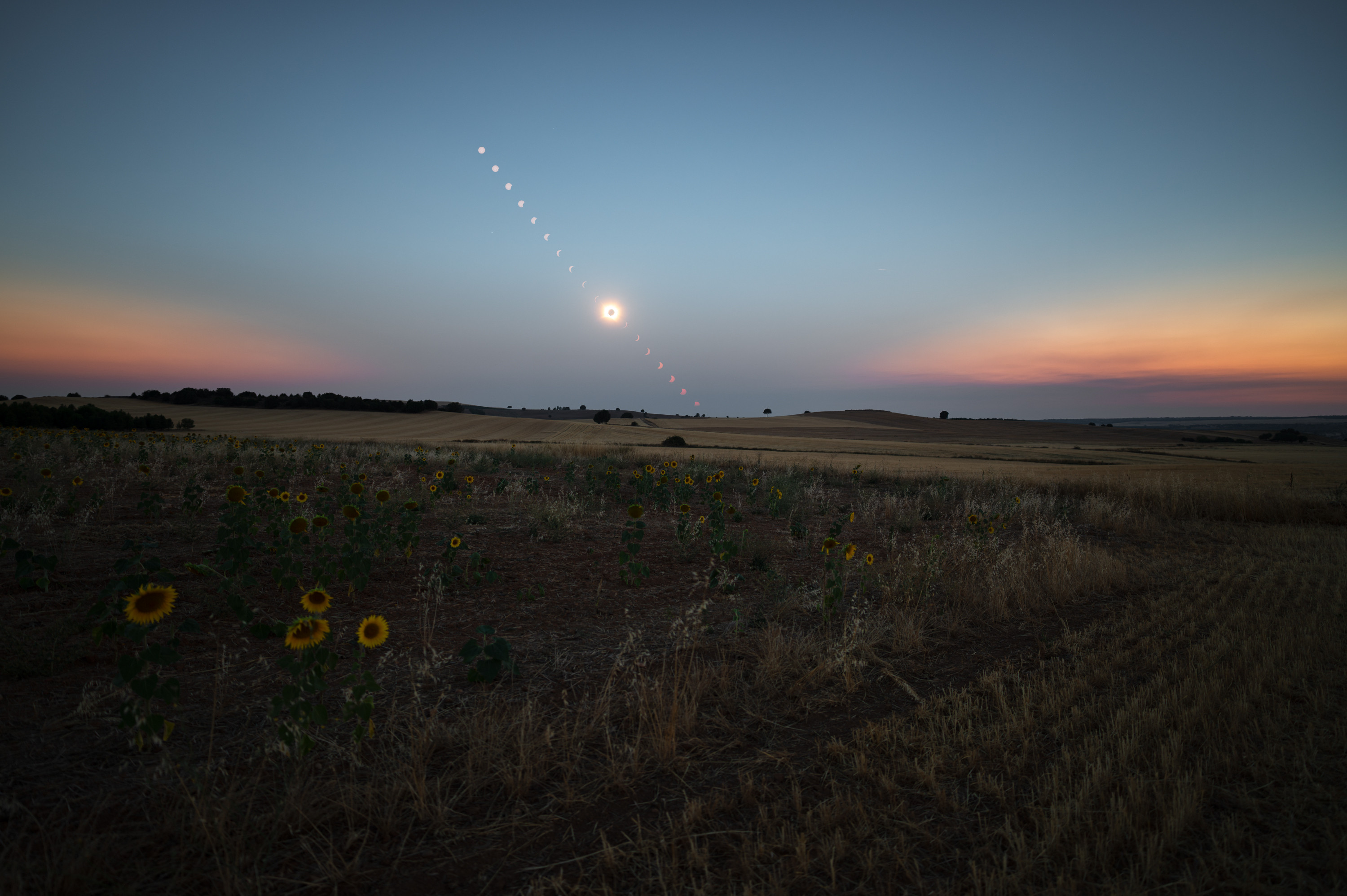
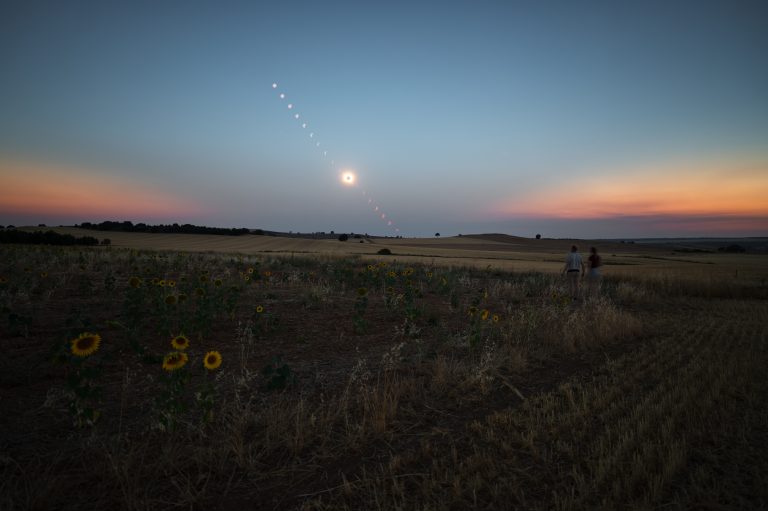
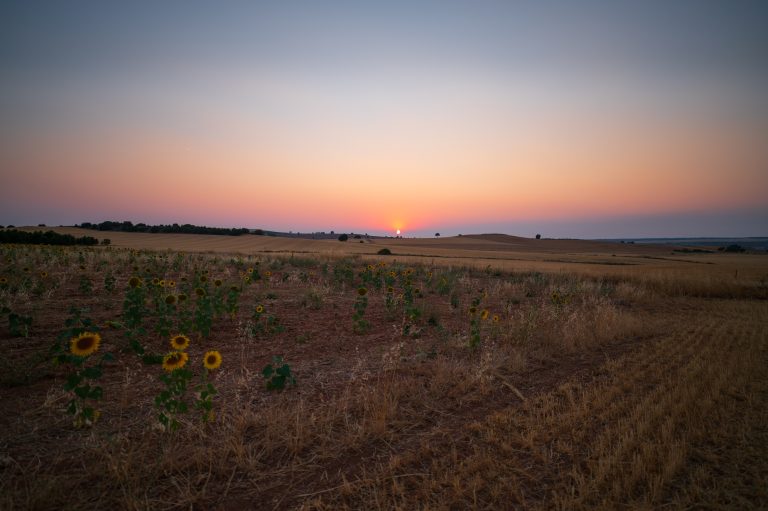
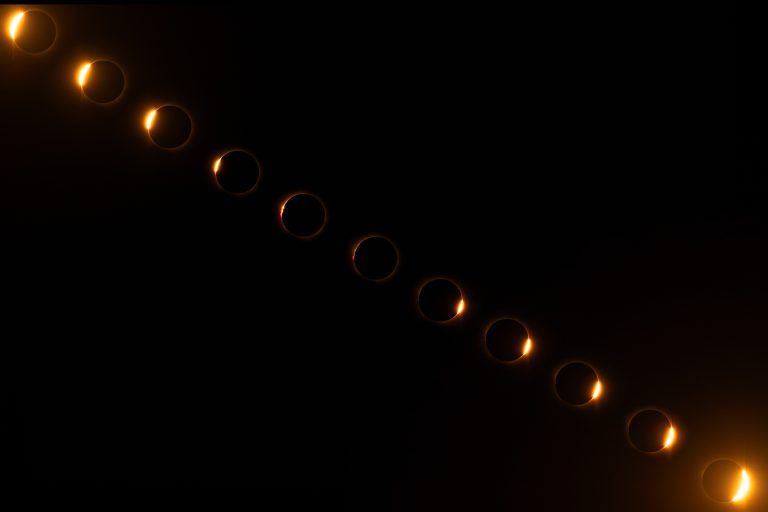
I settled on photographing a timelapse of the eclipse without a solar filter at 20mm with my second camera. That choice was pretty easy. I just shot the entire sequence on Aperture Priority mode and set the lens to f/2.8 I believe. Letting the camera choose the shutter speed, with a 5 second interval in the minutes during and surrounding the eclipse. I adjusted the interval to 30s outside these boundaries.
I wanted to automate the whole process with a program called N.I.N.A.. It’s designed for deep sky astrophotography but it required a laptop or mini-PC to run. I did some testing at home but never felt really confident in the use of these devices. I’d like to fully automate maybe future eclipses if I have the opportunity to visit them. After speaking to my friend Tomas in Crete past July, I fully decided keeping things for simple for the telephoto photograph and my first eclipse. I tell you my choices here, and they are very simple:
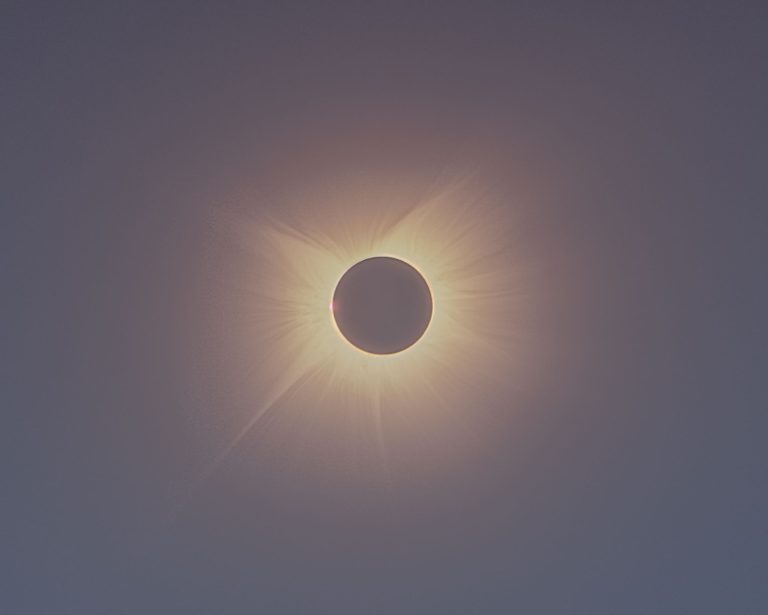
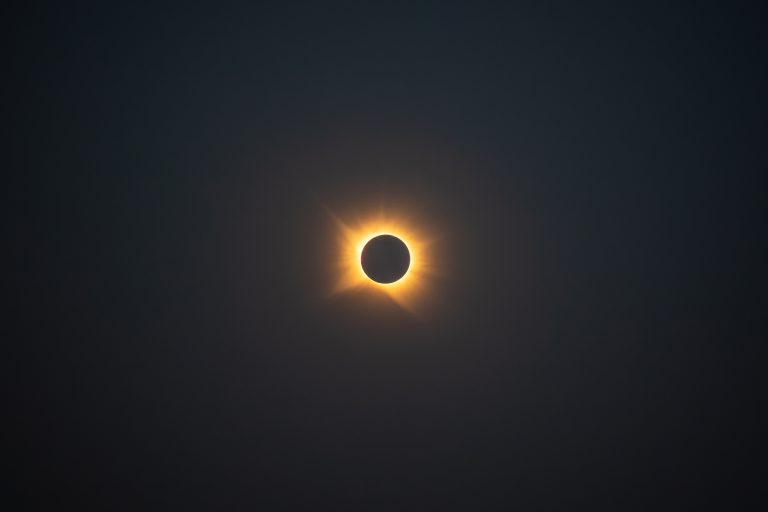
I created three user modes on my Nikon Z6iii camera, 1 profile for partial solar eclipse, 1 profile for near totality to get the diamond ring, 1 profile during totatily. I found all the values for my desired aperture and I shot my lens wide open at f/2.8 during totality, since it’s already razor sharp at max aperture.
First profile is used with a solar filter and I tested this all in the backyard, exposing for the sun at thesame height in the sky as during the eclipse one month before. I used a interval timer to shoot a frame every 3 minutes and near to totality i ramped that up to every 30s.
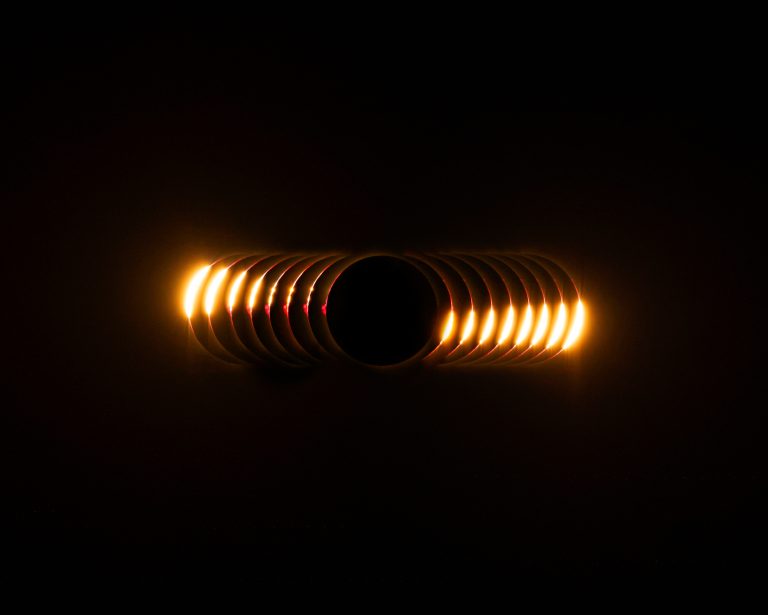
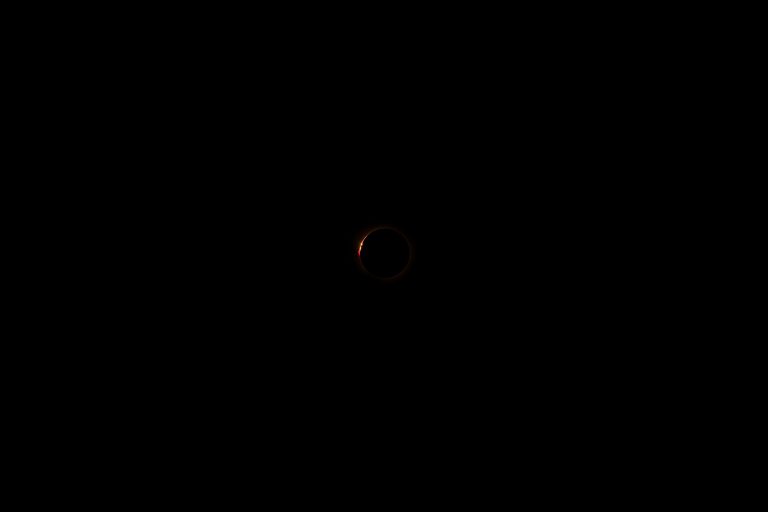
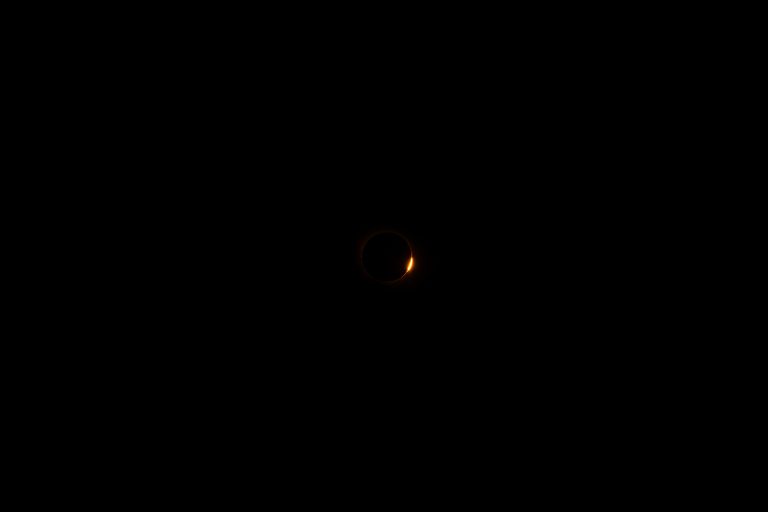
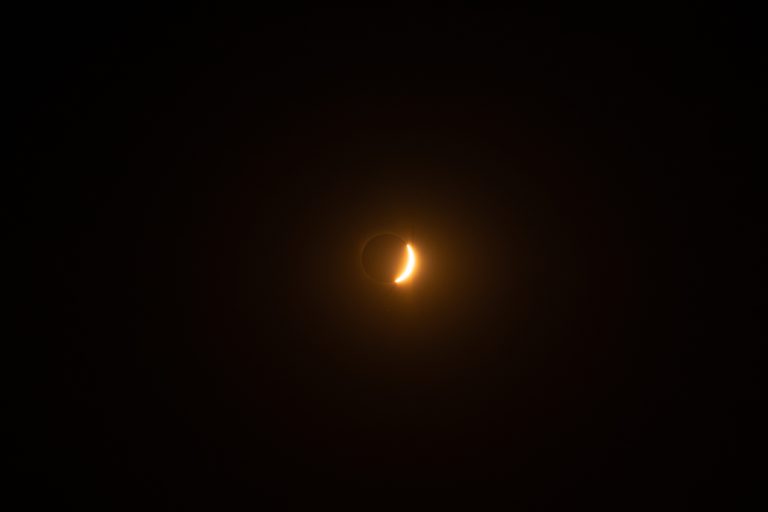
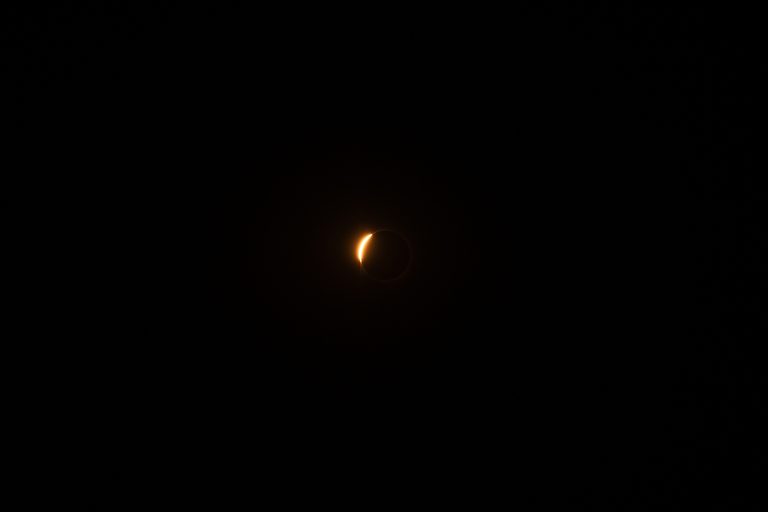
Second profile is with high shutter speeds near totality, without using a filter. I used my interval remote timer to shoot as many frames as I could during the last part of the partial phase capturing the beads and diamond rings. Luckily the Nikon Z6iii shoots 20fps in RAW mode, so that’s not a problem.
Third profile is a profile for bracketing photos, 9 images all 1 stop apart to get the most out of my camera. Since the total solar eclipse has the highest dynamic range of any event. The Nikon Z6iii supports bracketed interval timelapse, I tested the camera’s internal function and also the external timer for the other two profiles, since I wouldn’t have time to reset the time for every part of the eclipse.
Lastly I tested the hell out of my setup, doing at least 10 trial runs with an app called SET (Solar Eclipse Timer), it gives you certain time callouts depending on your GPS location and has a training function, allowing you to mimic the entire situation and testing your camera. I simulated this situation to be a lot better prepared for the actual moment.
I planned to track the sun with my Benro Polaris star tracker which I used for testing in the backyard, it has a minimal drift error at 200mm so I decided to realign the center a few minutes before totality.
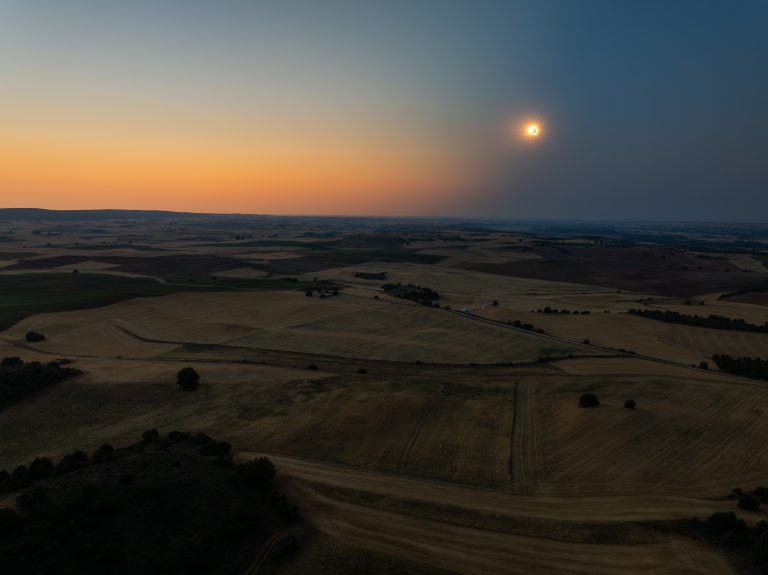
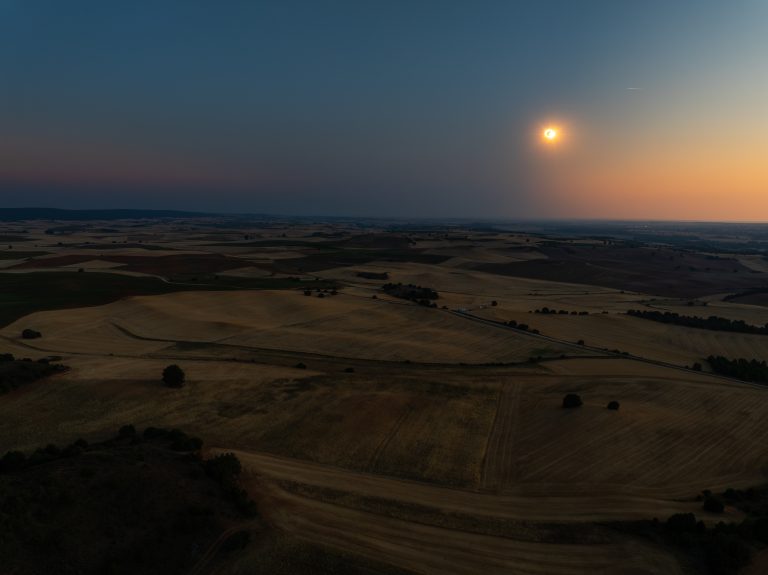
I own a DJI Mavic 3 Classic, which I also took to Spain. I wanted to test if it could produce some cool result which my stationary cameras wouldn’t be able to. I decided to lock the aperture to f/2.8 and minimal ISO only letting the drone choose a shutter speed. Same as the camera timelapse basically. The drone shots were fully automated. one hour before the eclipse I planned to fly the drone, program a path lapse. I needed only to put the drone in the air 10 minutes before totality and off it went.
Concluding the planning I wanted to shoot with three camera’s with a focal length of 200mm, timelapse at 20mm and an drone timelapse. The timelapses of the drone and 20mm to be fully automated. This the the plan I settled for.